
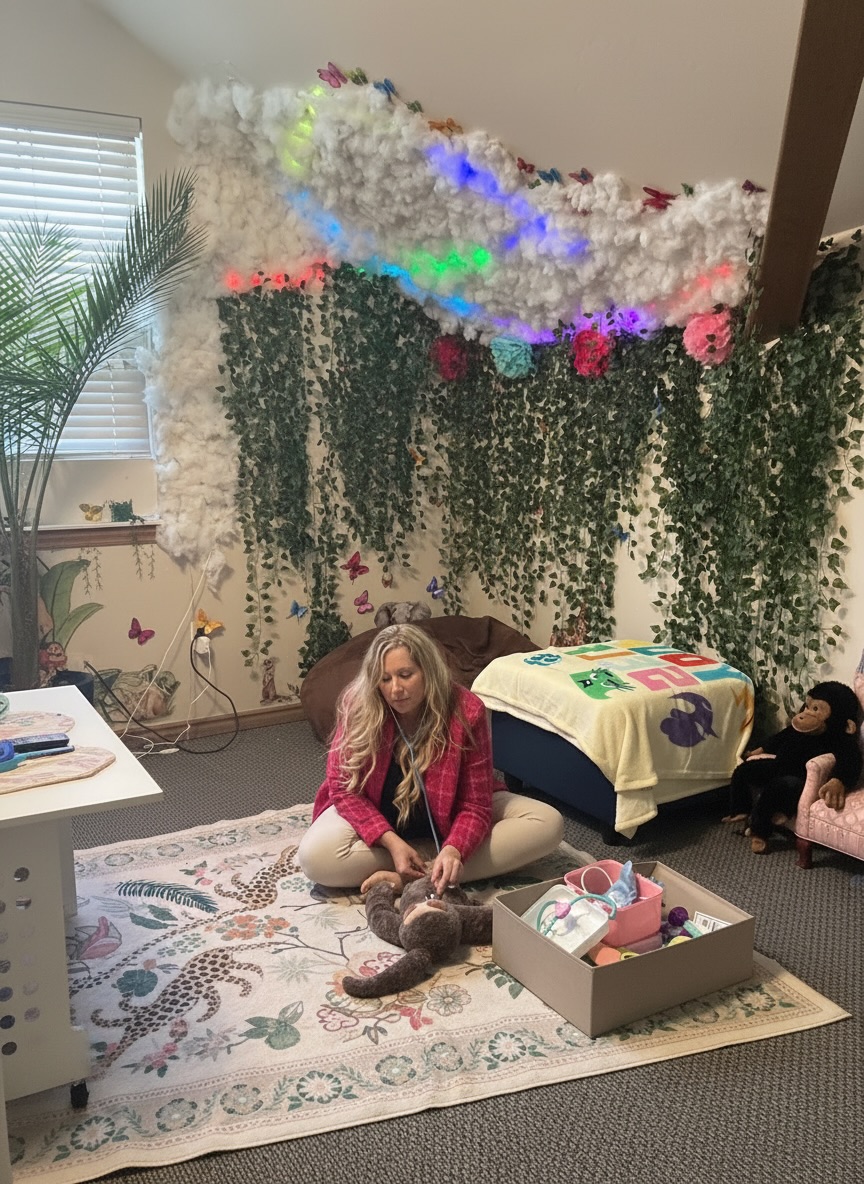
Why Play Therapy is Necessary for Children
Children are not cognitively capable of engaging verbally with adults in a manner required by traditional psychotherapy.
Click here for a brief video explanation.
Play is a child’s natural language and provides a therapeutic approach that is child-centered, evidence-based, and very effective for dealing with:
-
Trauma & Transitions
-
Neurodiversity supports
-
Cognitive struggles
-
Social Emotional struggles
-
Anxiety & Worries
-
Life Changes & Events
-
Depression & Behavioral outbursts
-
Many more
Most insurance plans cover play therapy. Years of research have shown it to be highly effective for treating adolescents, adults, and children.
Click here to see why play therapy is critical when treating children.
Through play therapy, a child client can:
- Build trust
- Learn proper socialization & positive behaviors
- Learn proper emotion regulation
- Decrease anxiety & externalizing behaviors
- Increase problem-solving skills
- Improve communication skills
- Increase self-esteem
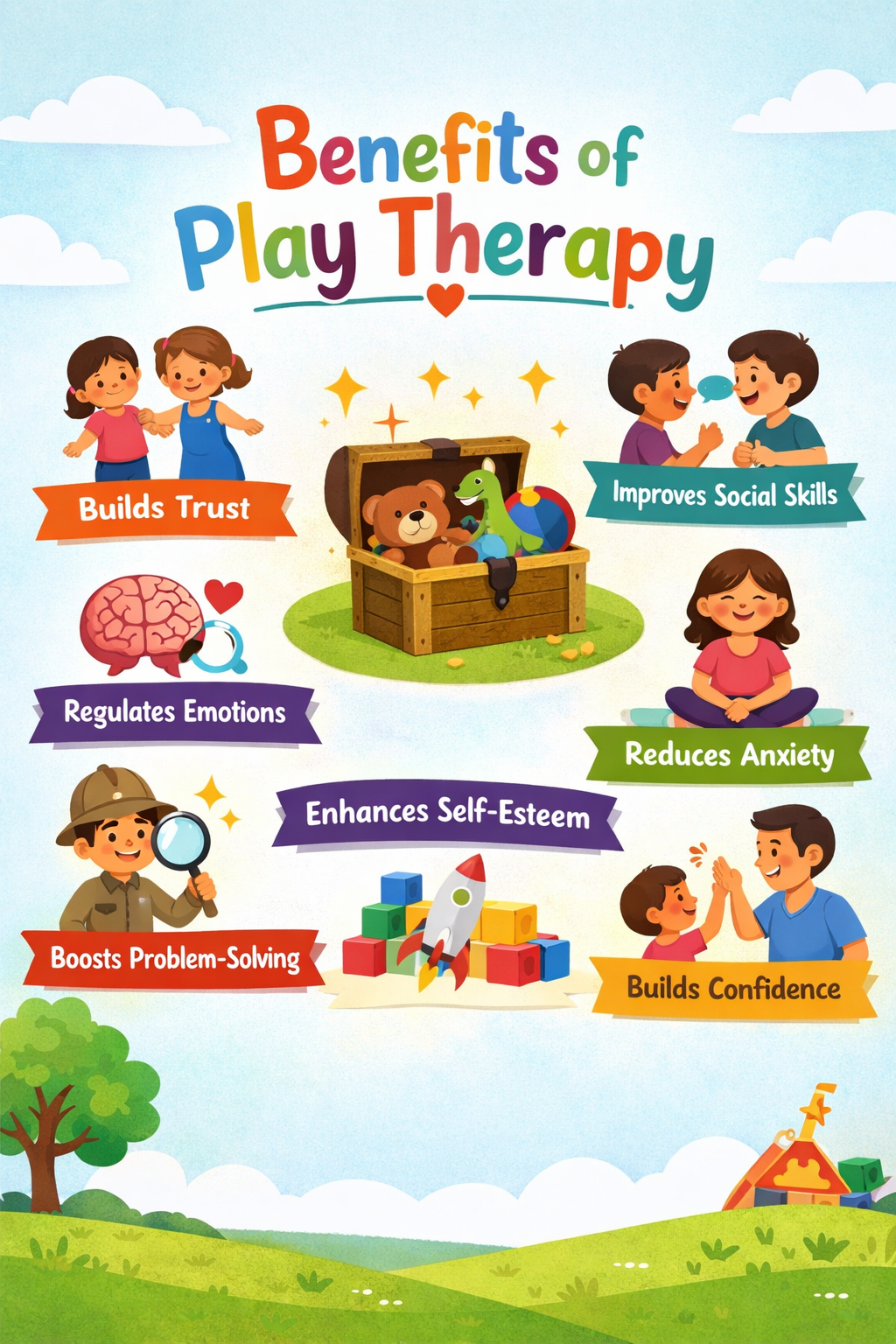
Benefits of play therapy infographic
Why Play Therapy is Necessary for Children
Children are not cognitively capable of engaging verbally with adults in a manner required by traditional psychotherapy.
Click here for a brief video explanation.
Play is a child’s natural language and provides a therapeutic approach that is child-centered, evidence-based, and very effective for dealing with:
-
Trauma & Transitions
-
Neurodiversity supports
-
Cognitive struggles
-
Social Emotional struggles
-
Anxiety & Worries
-
Life Changes & Events
-
Depression & Behavioral outbursts
-
Many more
Most insurance plans cover play therapy. Years of research have shown it to be highly effective for treating adolescents, adults, and children.
Click here to see why play therapy is critical when treating children.
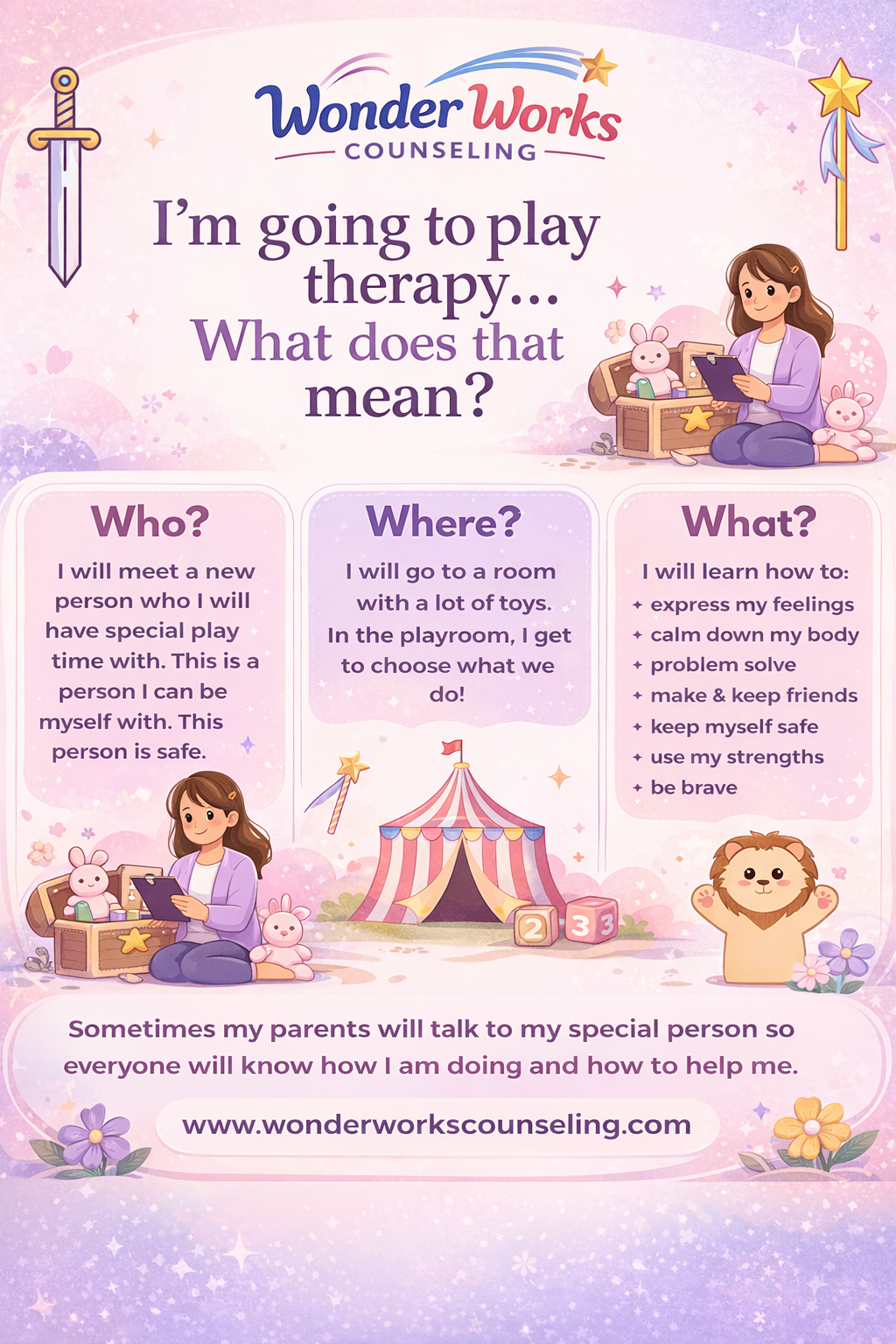
Exploring play therapy for kids
What to Expect from Treatment
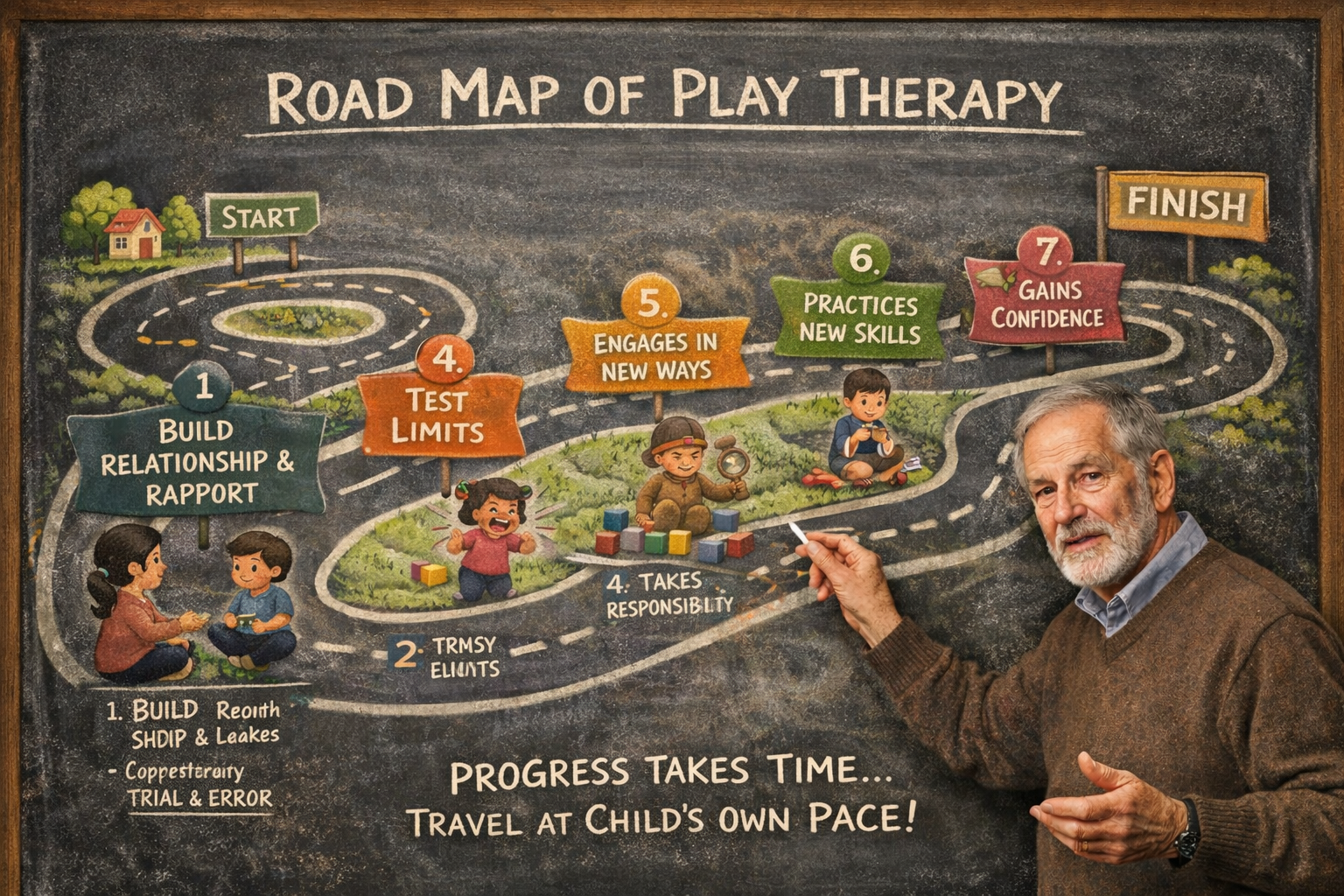
Progress in play therapy moves through seven stages. For more on what to expect at appointments, what progress looks like, how parents and caregivers support change, and more, CLICK HERE.
 English (United States)
  Spanish